Unveiling the Wonders of Scan to BIM Gloucestershire: A Journey into Limitless Possibilities
Revolutionizing Communication: 3D Modeling as a Universal Language
In the dynamic realm of design and innovation, 3D modeling emerges as an indispensable tool, offering a plethora of benefits and unlocking new dimensions in creativity. One of the primary advantages lies in its ability to provide a realistic visualization of concepts. Through intricate detailing and lifelike representation, 3D modeling and Scan to BIM Gloucestershire transcends the limitations of traditional 2D sketches, enabling designers to convey ideas with unparalleled clarity.
Furthermore, the efficiency and precision inherent in 3D modeling redefine the landscape of prototyping and product development. Design iterations become more seamless, fostering a streamlined workflow that accelerates the pace of innovation. Engineers and architects alike benefit from the ability to detect flaws or inefficiencies early in the design phase, ultimately saving time and resources.
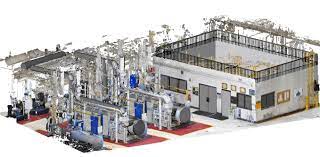
The immersive experience offered by 3D modeling extends beyond design processes into the realms of education and training. Educational modules enriched with 3D models enhance comprehension, providing a tangible and interactive learning experience. Additionally, industries such as healthcare leverage 3D modeling for surgical simulations, allowing practitioners to refine their skills in a risk-free virtual environment.
In the world of 3D modeling, communication becomes a universal language that transcends barriers. Architects, engineers, and designers can communicate complex ideas seamlessly, fostering collaboration and understanding across diverse disciplines. The visual language of 3D modeling bridges gaps in comprehension, ensuring that stakeholders grasp concepts intuitively, regardless of their technical background.
The properties embedded in 3D models stretch far beyond visual appeal. They encapsulate crucial data and information that contribute to the functionality and feasibility of a design. By integrating properties such as material specifications, weight distribution, and structural integrity, 3D modeling becomes an indispensable tool for engineers navigating the intricate balance between form and function.
In conclusion, the benefits of 3D modeling extend far beyond the aesthetic realm, permeating various industries and revolutionizing the way we conceive, communicate, and create. As technology continues to evolve, the role of 3D modeling as a catalyst for innovation is set to expand, propelling us into a future where the boundaries of imagination are limitless.